Casino Rewards and Roulette Dynamics on Multiple Wheel Designs
Cameron Krüger · Jun 13, 2026

Casino Rewards and Roulette Dynamics on Multiple Wheel Designs
Casino rewards programs operate through structured loyalty tiers, deposit matches, cashback offers, and comped play credits that directly alter how participants approach roulette sessions on different wheel formats. These systems track activity across spins and convert it into redeemable value, which extends session length while interacting with the house edge variations inherent in each wheel type.
Core Components of Modern Rewards Structures
Rewards accumulate through points earned per wager, with higher tiers unlocking reduced wagering requirements or enhanced cashback percentages on roulette losses. European wheels featuring a single zero maintain a 2.7 percent house edge, whereas American double-zero configurations reach 5.26 percent, and French wheels incorporate la partage or en prison rules that lower effective edges to 1.35 percent on even-money bets. Players often direct bonus funds toward lower-edge variants to stretch the credited amount across more decisions before requirements clear.
Bankroll Extension and Wheel Selection Patterns
Deposit bonuses and loyalty credits increase available funds, allowing extended exposure on wheels where rules favor the player, such as French designs with specialized even-money protections. Data from regulatory filings indicates that rewarded accounts show elevated spin volumes on single-zero layouts compared to non-rewarded play, as the supplemental value offsets variance more effectively when the baseline edge remains modest. Cashback mechanisms return a percentage of net losses, which participants frequently redeploy on American wheels during promotional periods despite the steeper house edge, since the rebate partially neutralizes the disadvantage over short sequences.
Behavioral Shifts Observed in Multi-Wheel Environments
Participants adjust bet sizing and wheel preferences when rewards attach to specific game categories, with many shifting from double-zero tables to single-zero or rule-enhanced variants once tier thresholds activate. Studies compiled by the Nevada Gaming Control Board reveal that loyalty members generate higher handle on European and French configurations once cashback thresholds activate, because the rebate structure aligns better with slower bankroll depletion rates on those designs. Progressive rewards that scale with volume also encourage longer sessions, during which the cumulative effect of even small edge differences becomes measurable across hundreds of spins.
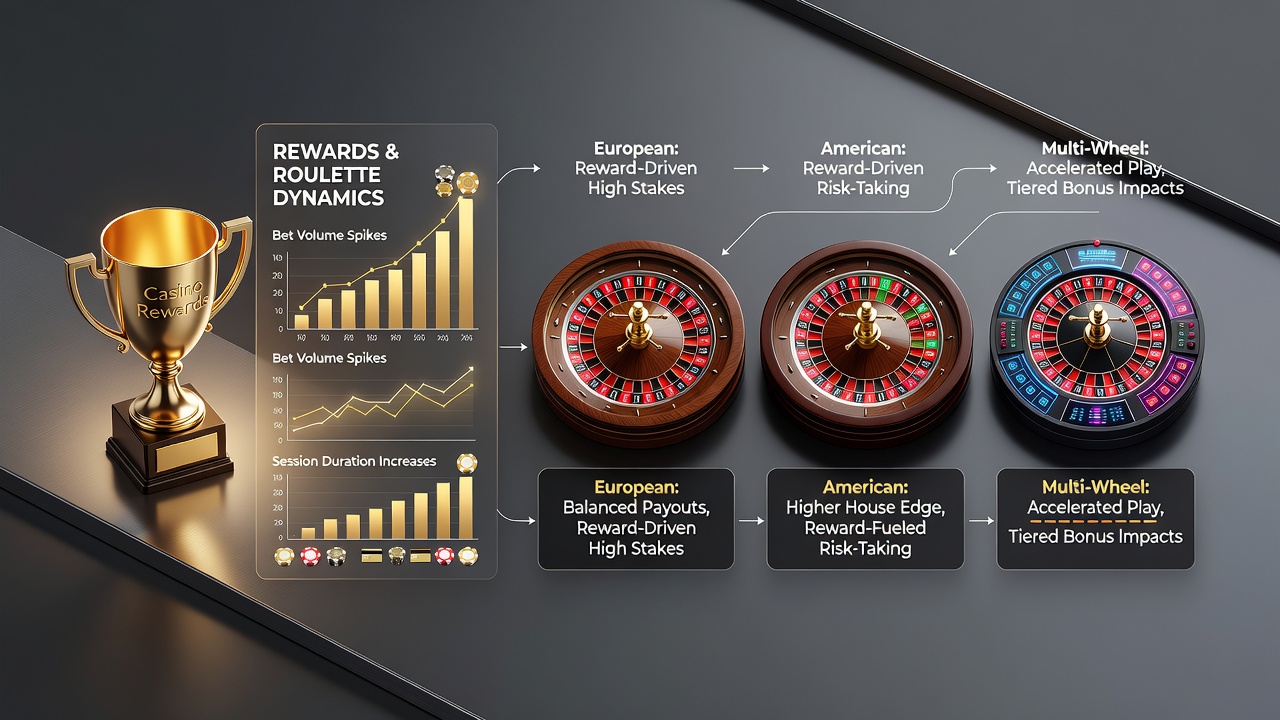
June 2026 marks the scheduled rollout of updated reward algorithms at several major operators that tie bonus multipliers to wheel-specific performance metrics, a change projected to further influence selection patterns as tracked in upcoming compliance reports. Those adjustments build on existing patterns where rewarded play migrates toward configurations offering la partage or single-zero layouts when the credited amount carries playthrough conditions.
Statistical Interactions Between Rewards and Edge Calculations
Effective house edge calculations shift when rewards enter the equation because bonus funds carry no initial cost to the participant yet still face the wheel's built-in percentages. Research published through the University of Nevada's gaming studies unit demonstrates that a 100 percent deposit match effectively halves the realized edge across an equivalent number of spins when applied to European wheels, whereas the same credit on American wheels produces a smaller relative improvement due to the doubled zero impact. Loyalty points converted to free spins or table credits follow similar dynamics, with redemption rates on French wheels showing the strongest retention of value because rule modifications interact favorably with the credited amounts.
Regulatory Tracking and Cross-Jurisdictional Data
Reports from the Alcohol and Gaming Commission of Ontario document that rewarded roulette activity concentrates on single-zero and rule-modified wheels once players reach mid-tier loyalty status, a distribution that holds across both online and land-based environments. These patterns emerge because the supplemental value provided by rewards programs reduces the proportional impact of higher edges, prompting measurable migration away from double-zero layouts unless specific promotions target them. Observers note that wagering requirements attached to rewards further shape decisions, since clearing thresholds demands sustained volume that benefits from wheels with inherently lower long-term attrition rates.
Conclusion
Rewards systems and wheel design features combine to reshape roulette participation through extended bankrolls, altered selection tendencies, and modified effective edges across European, American, and French configurations. Regulatory data and academic analyses confirm these interactions occur consistently as programs evolve, with measurable effects on spin volume and layout preference tied directly to the structure of each reward mechanism.