Roulette's Digital Shift: Analyzing Variant Choices Driven by Accessibility and Rewards
Casey Hayes · Jun 9, 2026

Roulette's Digital Shift: Analyzing Variant Choices Driven by Accessibility and Rewards
The landscape of roulette continues to evolve through digital platforms where variant selections reflect shifts toward greater accessibility alongside structured reward mechanisms. Research from industry reports indicates that online environments have expanded options beyond physical casino constraints, allowing players to engage with European, American, and French variants through devices that operate continuously without location barriers.
Expansion of Roulette Variants in Digital Spaces
Digital platforms host multiple roulette formats that differ in wheel structure and payout structures. European roulette features a single zero while American versions incorporate both zero and double zero, and French rules include additional options like en prison that modify house edges. Data from regulatory filings shows increased availability of these formats through online channels, where software providers deliver them via random number generators or live dealer streams that connect remote participants to real tables.
Players encounter these variants through interfaces that support instant switching between formats. Studies conducted by academic institutions have documented how this flexibility influences selection patterns, particularly when combined with mobile optimization that maintains consistent performance across smartphones and tablets.
Accessibility Factors Shaping Player Decisions
Accessibility drives variant choices through features such as 24-hour availability, multi-language support, and device compatibility. Figures from the Australian Gambling Research Centre reveal rising participation rates in regions where internet infrastructure supports seamless connections, enabling engagement regardless of time zones or travel requirements.
Live dealer variants add another layer by streaming real-time action from studios, which combines digital convenience with elements of traditional gameplay. Observers note that these options appeal to those seeking reduced latency and interactive elements, while RNG-based versions provide faster rounds for users prioritizing efficiency over social components.
Reward Systems and Their Influence on Variant Selection
Rewards in digital roulette environments often include welcome bonuses, cashback programs, and loyalty tiers that scale with activity levels. These structures vary by operator yet commonly tie to specific variants, such as enhanced multipliers on European wheels or progressive jackpots attached to certain American formats. According to data compiled by the Nevada Gaming Control Board, reward-linked promotions correlate with higher engagement across tracked accounts during periods of platform expansion.
One study revealed that participants frequently select variants based on how rewards align with risk profiles, where lower house edge options pair with loyalty points that accumulate toward tangible benefits. This pattern appears consistent across platforms that integrate tracking systems to monitor play and distribute incentives automatically.
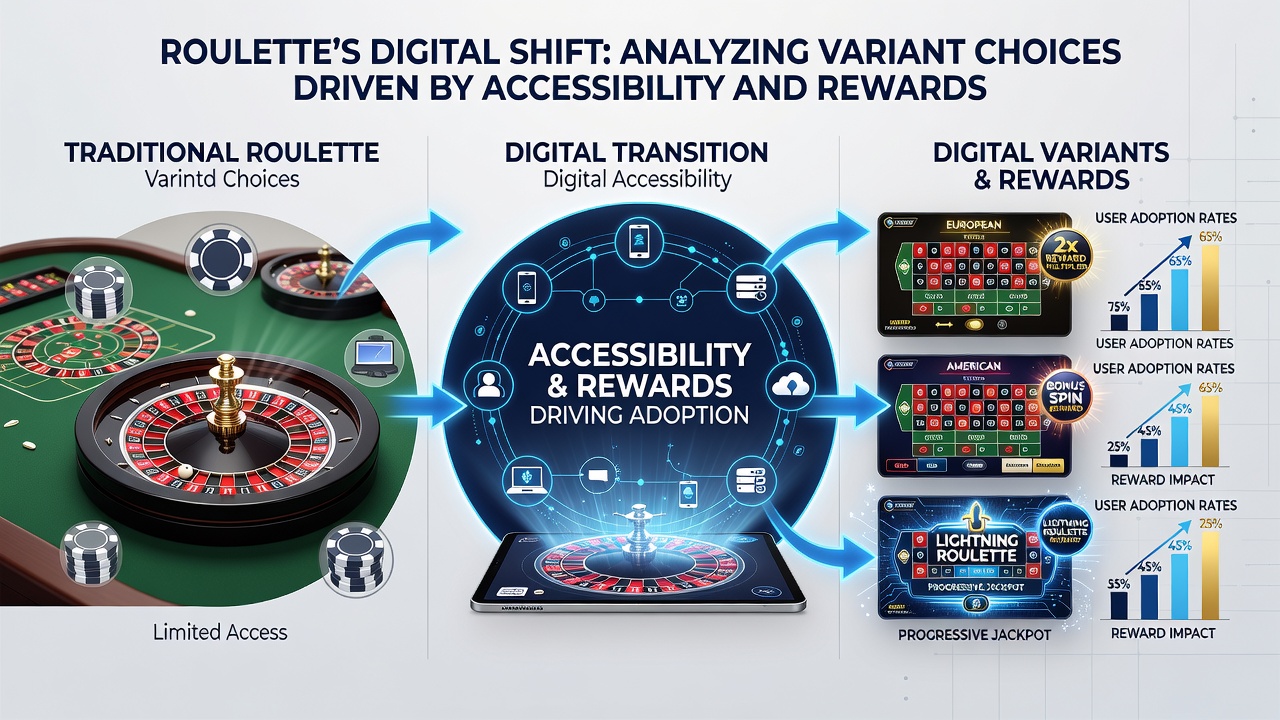
Platforms continue to refine these systems through algorithmic adjustments that respond to user behavior patterns. Evidence suggests reward accessibility, including deposit matches and free spin allocations, influences initial variant trials while sustained play depends on ongoing benefit structures.
Trends Emerging Around June 2026
Projections for June 2026 point toward further integration of personalized reward pathways that adapt to individual variant preferences. Industry organizations anticipate expanded use of virtual reality interfaces that enhance accessibility for select formats, alongside regulatory updates in multiple jurisdictions that standardize bonus disclosure requirements.
Researchers at several universities have begun analyzing preliminary data sets that track how these developments affect choice distributions. Results indicate sustained preference for variants offering balanced accessibility features paired with transparent reward terms, particularly in markets where digital infrastructure supports high-volume transactions.
Conclusion
Digital roulette maintains momentum through variant diversification that responds directly to accessibility demands and reward frameworks. Patterns documented across regulatory reports and academic analyses demonstrate how these elements interact to shape participation without reliance on physical venue limitations. Continued monitoring through June 2026 and beyond will clarify how emerging technologies refine these dynamics across global player bases.